
Visit elections.ca for the official information you need to vote
1-800-463-6868 / elections.ca / TTY 1-800-361-8935
This handbook contains all the basic information on when, where and the ways to register and vote in a federal election. It also has specific information for electors with disabilities, students, new Canadians, and First Nations, Inuit and Métis electors.
There are many products you can use to spread the word about a federal election, including:
*Available in braille, large print and DAISY formats (English and French only), as well as in multiple heritage languages.
Visit elections.ca to download resources or call 1-800-463-6868 or 1-800-361-8935 (TTY) to request printed copies.
In a federal election, Canadians vote to elect a member of Parliament (MP) to represent them in the House of Commons. MPs debate and pass laws on Canadians' behalf.
One MP represents the people of one riding. There are 343 ridings in Canada.
Candidates can represent a political party, or they can be independent, meaning they have no association with a political party. After all the votes are counted for each riding, the political party with the most MPs in the House of Commons usually forms the government. The leader of that party becomes the prime minister of Canada.
Note: Refugees and permanent residents are not allowed to vote in or work at federal elections.
Over 200,000 Canadians across the country are hired during an election. The jobs are paid and training is provided.
Anyone interested in being an election worker can learn more and apply online at elections.ca/jobs.
Most Canadians who are eligible to vote are already registered, but they may not be if they've recently moved or become a Canadian citizen, or never voted before.
Becoming a Canadian citizen does not mean that the person is automatically added to the National Register of Electors. To check if they are registered or to register to vote, they can use the Online Voter Registration Service at elections.ca or visit their local Elections Canada office.
All registered electors will get a voter information card in the mail about two weeks before election day. It tells them where and when they can vote as well as the accessibility of their assigned polling station. Electors can also register in person at their assigned polling station when they go to vote.
An elector's place of residence or home address is where they ordinarily live, where they think of as home or have adopted as home. Once they have confirmed their place of residence, they must have ID with that address to register and vote.
If an elector leaves home temporarily (for school, work or any other reason) but intends to return to it, it can remain their place of residence. Once they've decided on their place of residence, they must bring ID with that address when they go to register and vote.
If someone isn't sure if they've received a voter information card, or if the information on the card is incorrect, their voter information may not be up to date. They can visit elections.ca to register or update their address, or call 1-800-463-6868 or 1-800-361-8935 (TTY). We'll tell them where and when they can vote, as well as the accessibility of their assigned polling station. We can also tell them about tools and services that may be useful to them, such as a transfer certificate if their assigned polling station does not meet their accessibility needs. They can also register or update their voter information when they go to vote.
Sometimes, non-eligible individuals, such as permanent residents, are mistakenly added to the list of electors and receive a voter information card in the mail. This does not mean they can vote. Only Canadian citizens can vote in federal elections.
To register or update their address online, electors can use the Online Voter Registration Service at elections.ca. If they register online, they may be asked for the number from:
To register in person, electors will need to bring accepted ID with them. After an election is called, they can register and vote in person at:
To find the addresses for these locations or view the list of accepted ID, visit elections.ca.
To register by mail, electors can call Elections Canada (1-800-463-6868, toll-free in Canada and the United States) and ask for a form to be sent to them by mail.
Electors can vote almost any time during the election period.
They may choose the voting option that works best for them.
Electors' assigned polling stations will be open for 12 hours (hours vary by time zone).
Electors' assigned advance polling stations will be open from 9 a.m. to 9 p.m. on the Friday, Saturday, Sunday and Monday the week before election day.
Electors can go to any Elections Canada office by the Tuesday before election day, 6 p.m. They will vote using the special ballot process. After the election is called, electors may visit elections.ca or call us to find the office nearest them.
For information about the accessibility of any Elections Canada office, call 1-800-463-6868 or 1-800-361-8935 (TTY).
Elections Canada Vote on Campus offices will be open on participating campuses across the country for four days about two weeks before election day. Any eligible elector can vote at a Vote on Campus location.
If electors choose to vote on campus, they can call 1-800-463-6868 or 1-800-361-8935 (TTY) to find out about the accessibility of the Elections Canada Vote on Campus office nearest them.
After the election has been called, Canadian electors from anywhere in the world may apply to vote by mail. Deadlines apply. They can apply to vote by mail online or by contacting any Elections Canada office. Once their application is accepted, Elections Canada will send them a special ballot voting kit in the mail. The deadline to apply to vote by mail is the Tuesday before election day, 6 p.m.
Electors should apply as soon as possible to allow enough time for their special ballot voting kit to reach them and for them to return their completed ballot to Elections Canada by election day.
Once electors apply to vote by mail, they can't change their mind and vote at advance polls or on election day.
If electors have any questions about the voting process, they can call 1-800-463-6868 or 1-800-361-8935 (TTY), or reach out to their local Elections Canada office.
Some electors, including electors with disabilities, may be eligible to vote in another way.
Eligible electors who live in a seniors' residence or long-term care facility may be able to vote at a mobile polling station in their residence.
Elections Canada offers mobile polling stations in most residences. If required, we transport the ballot box from room to room. Electors can contact their facility administrator to find out if mobile polling will be offered in their residence.
Electors who are unable to read or unable to vote using the special ballot process because of a disability may, upon request, vote at home. Electors who request to vote at home must meet the criteria outlined in the Canada Elections Act, and all other voting options (including voting by mail) must have been considered beforehand. Electors must contact the Elections Canada office in their riding to request this voting option.
Election workers are there to help. If an elector needs anything to make their voting experience easier, they can speak to an election worker when they go to vote. For example, they can:
When it's time to count the ballots, the election worker will remove all the unmarked inner envelopes from their signed outer envelopes. The election worker will then return only the unmarked inner envelopes to the ballot box and mix them up. This way, no ballot can be traced back to the person who cast it and their vote remains secret.
Electors have three options to prove their identity and address when they go to vote.
Option 1
Show one ID card issued by a Canadian government (federal, provincial/territorial or local) with their photo, name and current address. For example: their driver's licence.
Option 2
+
Show two pieces of ID. Both must have their name, and at least one must have their current address. Electors can also use their voter information card as proof of address if their name and address are correct on the card. They will still need to bring one other piece of ID with their name.
An elector doesn't have these? No problem!
There are other pieces of accepted ID. The full list is available in 17 Indigenous languages as well as in 33 other languages besides English and French at elections.ca. For other formats, such as large print, braille and DAISY, electors can call 1-800-463-6868 or 1-800-361-8935 (TTY).
Option 3
+
If an elector doesn't have ID documents, they can still vote if they declare their identity and address in writing and have someone who knows them and who is assigned to their polling station (likely living in the same neighbourhood) vouch for them.
The voucher must be able to prove their identity and address. A person can vouch for only one person (except in long-term care facilities).
We accept ID cards and documents issued in their original formats. We do not accept photocopies or scanned versions of documents that were not issued electronically. For documents issued electronically (such as e-statements or e-invoices), we accept printouts, or electors may show them on a mobile device.
We accept expired pieces of ID to prove identity. We also accept different pieces of ID from the same source if the documents serve different purposes. For example, we accept an invoice and a transcript from the same school.
For a piece of ID to be accepted, it must be issued with the elector's name and/or current address. They can't be added by hand unless they are added by the issuer of the document, like a residence administrator. For example, a current or expired Canadian passport may be used as a proof of identity (i.e. name) but not as a proof of address. This is because the passport holder writes their address by hand in the passport.
Some electors may have difficulty proving their address. If they live at or receive services from one of the following designated establishments, they can ask for a letter of confirmation of residence, letter of stay, admission form or statement of benefits:
*Only if the establishment provides food service.
We will also accept a letter of confirmation from a public curator, public guardian or public trustee.
If an elector needs to use a letter of confirmation of residence, they should contact the establishment as soon as possible after the election is called. The establishment may issue a letter of confirmation on its official letterhead or use the Elections Canada template Letter of Confirmation of Residence, available at elections.ca.
The elector will still need to show a second piece of ID with their name.
All electors are assigned a polling station for election day and advance polling days. Once the election is called, electors can make sure their assigned polling stations meet their accessibility needs by:
Elections Canada also welcomes Video Relay Service (VRS) calls. Visit srvcanadavrs.ca to learn more.
If an elector's assigned polling station doesn't meet their accessibility needs, or if they live in a community where there is no polling station within a reasonable distance from their home, they should call their local Elections Canada office or 1-800-361-8935 (TTY). We will help them find an alternate polling station or discuss other ways they may be able to vote.
More information about the accessibility criteria used to select polling stations is available at elections.ca.
To request voting assistance in advance, including language and sign language interpretation, electors must call the Elections Canada office in their riding by the Tuesday before election day, 6 p.m. The number can be found:
Electors can also bring an interpreter to help them vote. Interpreters need to make a written declaration, may assist more than one elector, and do not have to be an eligible elector.
For all the official information on voting, electors may visit elections.ca. The website is fully accessible and has voting information in multiple languages, including American Sign Language and Quebec Sign Language. Electors can also order products in other formats, including large print, braille and DAISY.
To answer questions from electors who do not speak English or French, Elections Canada works closely with CanTalk, a real-time language interpretation service available in over 220 heritage and Indigenous languages.
If an interpreter is not available at the time of the call, CanTalk will suggest a time for a callback. Interpretation services are subject to availability.
Various products, including the Guide to the federal election, the list of accepted ID to register and vote, and infographics and informational videos, are available in many heritage and Indigenous languages.
We offer many tools and services to make voting in the federal election easier. If an elector requires assistance during the voting process, they can call Elections Canada, visit any Elections Canada office across the country, or speak to an election worker when they go to vote.
Note: Braille lists of candidates are available only on election day. Large print is available on advance polling days and on election day.
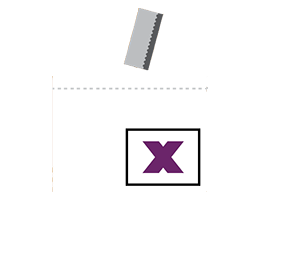
If an elector has trouble marking their ballot, they can bring someone to help them or ask an election worker for help. The helper must make a written declaration that they will respect the secrecy of the vote. The helper does not need to be an eligible elector. Electors do not need to use an "x" to mark their ballot. They can use any other mark, as long as it clearly indicates their choice and does not identify them in any way.
Electors are also welcome to bring help when they vote. This could include bringing their service animal or using an assistive device, such as a mobile device or smartphone.
To make polling places more welcoming and make voting easier for electors in First Nations, Inuit and Métis communities, Elections Canada works with local Elders and youth to:
Subject to resource availability, the program is offered at polling places serving Indigenous communities.
There are safeguards built into the federal electoral process at every stage to protect the integrity of elections.
Elections Canada, security agencies, the Commissioner of Canada Elections, political parties, candidates and electors all have a role to play in ensuring the integrity of an election. Elections Canada's role includes administering federal elections and overseeing the safeguards in the voting process
Elections Canada makes security a foundational part of every new IT system and process we develop.
Elections Canada works with security agencies to share information and discuss our distinct and complementary roles, responsibilities and protocols.
Elections Canada continually updates the National Register of Electors, using data from over 40 sources, including from Immigration, Refugees and Citizenship Canada. Before voting, electors must prove their identity and address.
The voting and counting processes are fully observed by witnesses, including candidates and parties' representatives. Election workers count paper ballots in front of witnesses.
Potential contraventions of the Canada Elections Act are referred to the Commissioner of Canada Elections. The Commissioner can receive complaints from the public in English, French and other languages.
Ballots are counted by trained and paid election workers, in the presence of candidates, candidates' representatives or other designated observers.
Before the count, election workers close the doors of the voting place. No one is allowed to enter or leave.
The election officer who counts the votes then:
To ensure transparency, with many people watching, they unfold each ballot and say aloud the name marked on each ballot.
Staff tally up the votes, record the tallies on paper and report the totals to the returning officer (the official who manages the election for that electoral district).
We welcome electors' feedback on their voting experience, including on accessible tools and services. To let us know how we're doing, electors can: